
You've sent out your resume countless times, yet you're met with silence or, even worse, rejection after rejection. It's discouraging, right?
But here's the thing: If your resume keeps landing in the 'no' pile, there's likely a specific reason (or a couple) behind it. Is it those pesky ATS bots dismissing you? Or perhaps a sharp-eyed recruiter noticing something amiss?
Good news is, we've got you covered. In this article, we'll dive deep into the most common culprits of resume rejection and arm you with actionable strategies to ensure your resume doesn't just land on a desk, but also lands you the job. Ready to troubleshoot your job search woes? Let's get started.
Your resume is getting rejected by ATS
Recruiters worldwide use Applicant Tracking Systems to streamline their hiring processes. ATS software automatically scans large numbers of resumes, rejecting any that do not meet predetermined keyword criteria. If you receive a rejection instantly (or within 1-2 days of applying) your resume is likely getting rejected by the automated ATS system rather than a recruiter.
Here is how to optimize your resume to make it past the ATS:
Problem: Lack of relevant keywords
ATS systems rely heavily on keyword matching, meaning the software scans your resume for specific keywords. If it doesn't find the exact words it's looking for, the system flags your resume as not including the right skills, and your resume will likely be rejected.
Solution: Keyword research and optimization
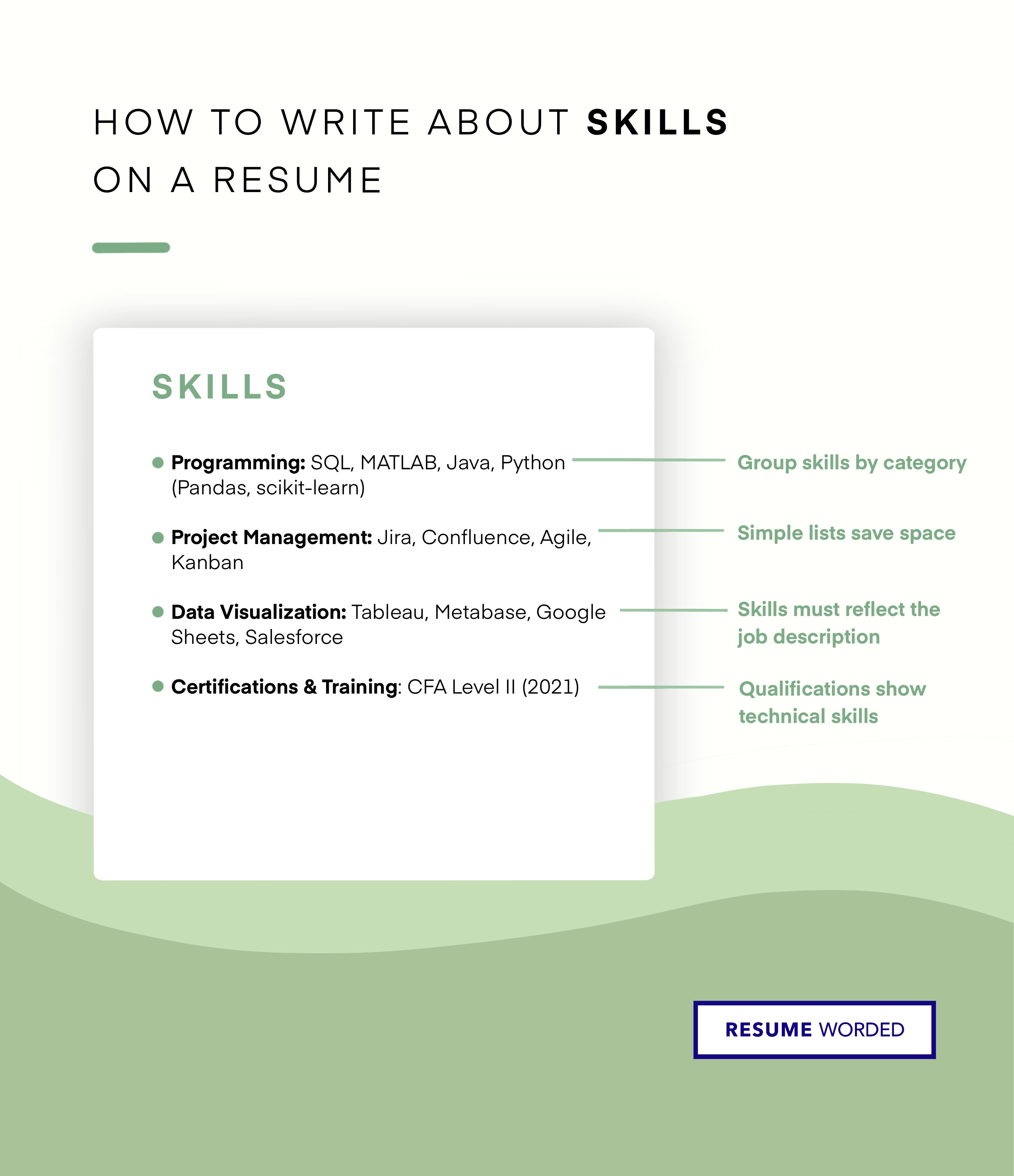
To ensure your resume gets past the ATS filter, use a keyword finder to scan the job description and generate a list of essential keywords. These keywords exemplify the hard skills a hiring manager expects to see on your resume. Ensure these keywords appear at least once on your resume in your hard skills and work experience sections.
You can also use the skills search tool below to get a list of skills and keywords relevant to the job you’re applying for.
Problem: Improper formatting
ATS is an automated program, and like all programs, it has limitations. If a resume is improperly formatted, contains complicated layouts, or is sent in the wrong file format, the software cannot perform its scan, leading to an automated rejection.
Solution: Use an ATS-approved template
To avoid formatting issues, always build your resume using an ATS-optimized template. These templates use simple fonts, one or two-column layouts, and don't include graphics, colors, images, or graphs. Save your resume in an approved file format, .doc, .docX, or PDF, to reduce the likelihood of ATS compatibility issues.
Problem: Mismatching job titles
ATS looks for precise keywords related to the position, which almost always include the specific job title used in the job description. If your resume doesn't contain the exact wording of the job title, it will likely be rejected by ATS.
Solution: Include the exact job title
Always include the exact title used in the job description somewhere on your resume. If you haven't worked in that specific position previously, don't worry. You can include the exact job title in your resume summary following this simple template:
(Job Title) with (X) years of experience (brief description of experience)
For example: Creative Narrative Designer with ten years of experience in storyboard development.
Your resume is getting rejected by hiring managers
If you are getting rejected after 3+ days, your resume is likely making it past the ATS scanners (congratulations), but is not being approved by hiring managers. This means that there is an issue with the content or relevance of your resume. To fix this problem, you need to tailor your resume to the individual position and optimize your descriptions to impress a recruiter.
Problem: Lack of quantifiable achievements
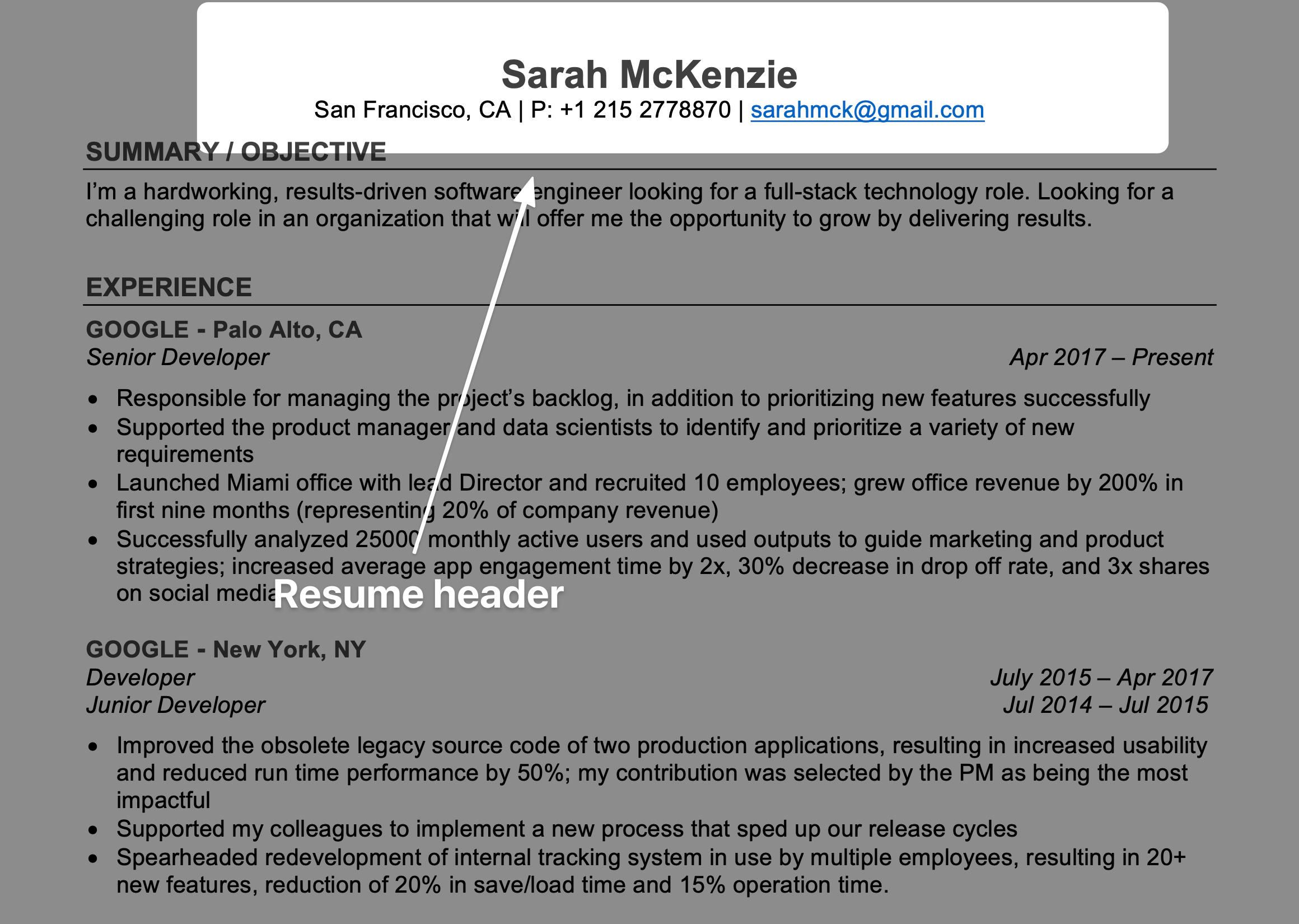
Modern recruiters expect hard proof of your skills and experience, not just a list of previous roles and responsibilities. Resumes lacking in quantified statements and metrics are often rejected as they don't demonstrate enough tangible value.
Solution: Always use metrics to explain your experience
When describing your previous roles, highlight accomplishments over responsibilities and include numbers, percentages, and statistics to showcase the positive results of your work. Quantifying your skills this way demonstrates your impact and is far more impressive and memorable to a recruiter.
Problem: Grammatical and spelling errors
77% of hiring managers admitted they would likely dismiss a resume with bad grammar or spelling mistakes. This may sound petty, but typos make your resume appear unprofessional, rushed, and lacking in attention to detail.
Solution: Use a resume proofreading tool
Proofreading your resume before sending it off is a no-brainer, but it's easy to miss little mistakes in your own work. Have a friend review your resume before applying, and use AI proofreading tools to check for common errors. Remember: Check twice, apply once.
Before sending out your resume, upload it to the tool below to find out if it effectively highlights your most relevant experience, accomplishments, and skills. The tool will also identify any grammar issues and mistakes, providing solutions for improvement.
Problem: Lack of customization / relevance
Gone are the days of applying to multiple jobs with the same resume. Recruiters now expect to see a tailored resume explicitly highlighting why you are the right candidate for their job. If your resume contains generic information and unrelated experience, it will likely be rejected.
Solution: Tailor your resume to each application
Only include relevant work experience, skills, and qualifications for the job you're applying for, and tailor your resume to every application by using targeted keywords, including a relevant summary, removing non-industry-related skills, and prioritizing experience that aligns with the new position.
Your resume is getting rejected for employment gaps or overqualification
If your resume is still rejected despite fixing all the issues above, consider these less common reasons for rejection.
Unexplained employment gaps
Employment gaps are far more common on resumes than they used to be, but a lengthy unexplained gap can leave a recruiter questioning the reason behind your time away from work. Consider including a brief sentence to explain any gaps in your resume longer than six months, so a recruiter isn't left guessing.
Overqualification
Overqualified applicants can also be rejected as employers assume they will quickly become dissatisfied with a less complex role. If you are applying for a job you might be considered overqualified for, explain in your resume summary why you're applying for the new position despite your extensive experience to alleviate any potential concerns.
How to minimize your chances of resume rejection
Here are some additional tips to optimize your resume, keep it short, catchy, and concise, and maximize your application's chances of success.
- Keep your resume to 1-2 pages max.
- Remove any resume red flags.
- Focus on industry-specific hard skills over generic soft skills.
- Use bullet points instead of paragraphs to make your resume easier to scan.
- Use power phrases to make your resume memorable.
- Replace overused buzzwords with action verbs.
FAQ
What are the most common reasons an ATS rejects a resume?
Four issues cause most automated rejections: missing keywords the job description asks for, formatting the software can’t parse (tables, columns, graphics, unusual section headers), no match for the exact job title, and failing a hard requirement the employer set as an auto-filter — like a minimum number of years of experience or a required degree. All four are fixable before you apply.
How can I tell whether the ATS or a human rejected my resume?
Timing is the best clue you have. A rejection that lands instantly or within a day or two usually means an automated filter screened you out. A rejection that arrives after three or more days usually means your resume reached a human — and the problem is content: unquantified accomplishments, errors, or a resume that wasn’t tailored to the role.