Should You Use the Past or Present Tense on Your Resume?
Resumes should be written in past tense, even for your current job, with one exception. A recruiter explains when present tense is right, with examples.
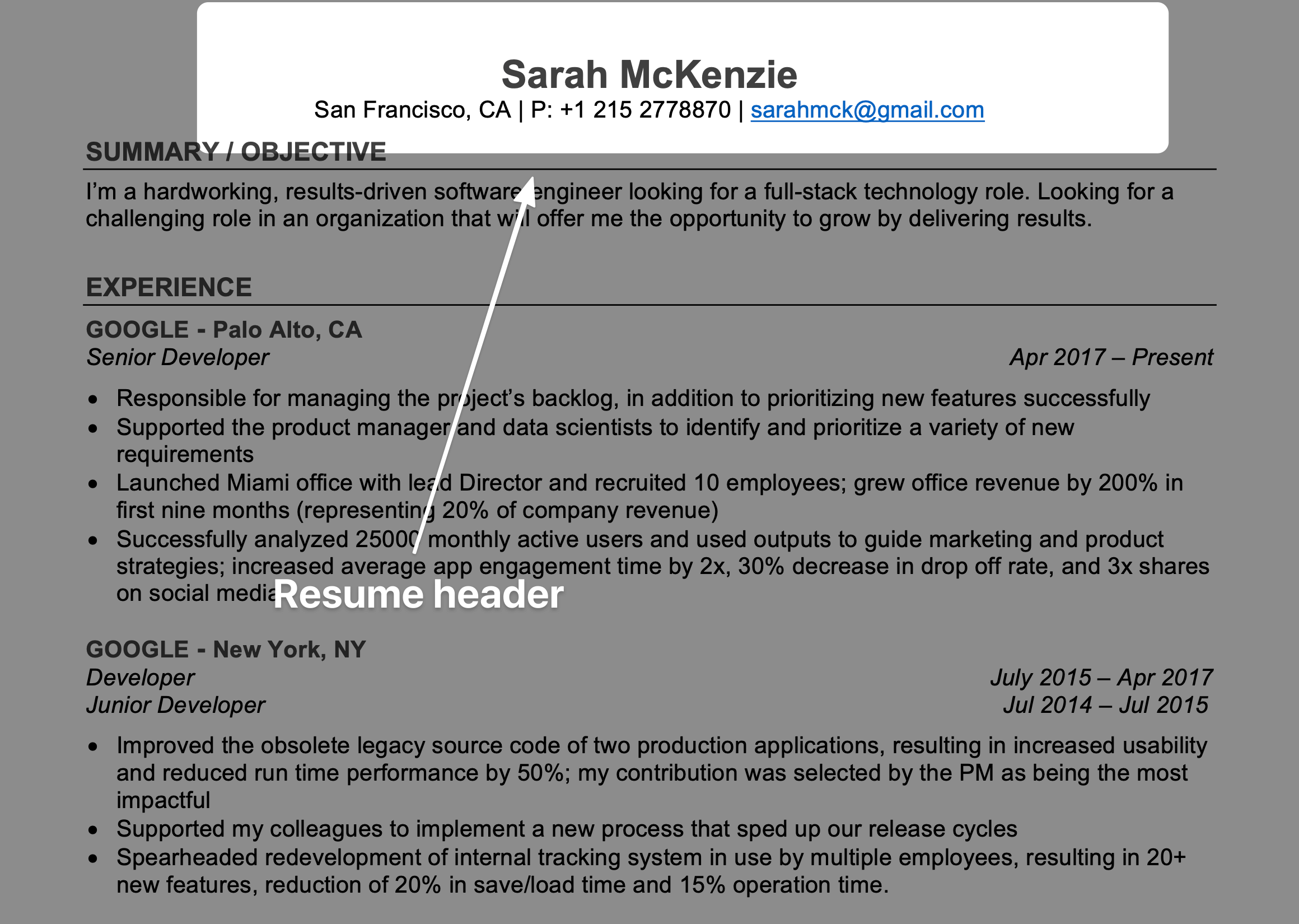
What goes in a resume header: your name, phone, email, and location. Plus what to put under your name, what to leave out, and examples that pass ATS.
A recruiter-backed guide to name-dropping in your cover letter: when it builds credibility and opens doors, when it backfires, and how to do it without sounding pretentious.
Recruiter-backed strategies for raise negotiations in 2026: what the average raise really is, how much to ask for, and how to build the case for more.
Bad resume examples: 11 common mistakes (formatting, buzzwords, wrong order, soft-skill overload), each shown with a side-by-side fix.
Quitting a job after a month can raise questions, but it doesn't have to hurt your future prospects. Here's when it's okay to leave, whether the short stint belongs on your resume, and how to avoid a pattern recruiters flag.
Lying about a degree rarely survives a background check. Education verification is cheap, fast, and routine. What's actually illegal, and honest fixes.
Why your resume keeps getting rejected: the ATS checks and hiring-manager checks that screen you out, how to tell which one stopped you, and the fixes.
Is LinkedIn Premium worth $39.99/month? A hiring manager on which Premium features actually matter, and how to get the same results free.
"My free resume review was truly eye-opening. I found out why I wasn't getting interviews and exactly what to add to get past resume screeners. I've already had way more callbacks since I used it. I recommend it to all my friends who are job searching."
Thank you for the checklist! I realized I was making so many mistakes on my resume that I've now fixed. I'm much more confident in my resume now.